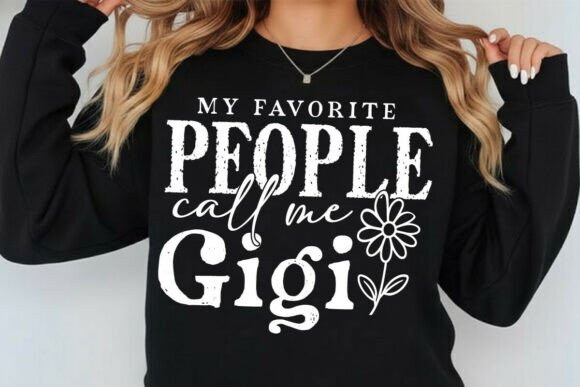
My Favorite People Call Me Gigi SVG Review
As a designer who spends more time behind an embroidery machine than a computer screen, I approach every new digital asset with a healthy dose of skepticism. When I first opened the My Favorite People Call Me Gigi SVG, I wasn't just looking for a cute phrase; I was evaluating its structural integrity for real-world production. This design falls squarely into the T-Shirt Designs and Graphics category, but for those of us in the craft business and commercial embroidery space, a vector file is only as good as its translation to thread. After testing this design across multiple substrates and analyzing its node structure, here is my honest assessment of how it performs when moved from screen to fabric.
First Impressions and Visual Personality
The immediate mood of this design is warm, familial, and distinctly personal. It strikes that difficult balance between playful typography and legible clarity that is essential for personalized gifts. Unlike overly ornate scripts that often turn into thread nests on smaller hoop sizes, the letterforms here suggest a clean, modern aesthetic. For an Etsy seller or handmade shop owner, this visual personality is crucial. It reads instantly as a "Gigi" identifier without requiring the viewer to squint. The layout feels balanced, which tells me the original digitizer understood center of gravity—a critical factor when embroidering on curved surfaces like caps or the chest area of a sweatshirt.
From a technical standpoint, having access to the open EPS file alongside the SVG and PNG is a significant advantage. In my studio, being able to adjust anchor points before digitizing means I can optimize the stitch path for my specific machine. The 300 DPI resolution of the included PNG also serves as an excellent reference for creating printable mockups or verifying color separation before committing to a full production run.
Real-World Application: The Custom Sweatshirt Test
To truly evaluate this machine embroidery design, I bypassed standard quilting cotton and went straight to a heavyweight French terry sweatshirt. This is a common request for custom apparel, and it presents unique challenges due to fabric texture and stretch. I envisioned this as a holiday embroidery project or a boutique product for grandmothers, so the finish needed to be retail-ready.
During the stitching process, the design’s adaptability shone through. Because the source files allow for easy color changes, I swapped the standard black for a variegated rose thread to match the client's branding. The design handled the transition well. On the sweatshirt, the lettering maintained its crispness despite the fleece backing. This is where many T-Shirt Designs fail; they are digitized for flat woven fabrics and distort on knits. However, with the proper stabilizer (I used a medium-weight cutaway), the My Favorite People Call Me Gigi SVG translated into a professional embroidered patch of text that sat flat against the garment. For small shop products, this reliability reduces waste and increases customer trust in your finished product quality.
Navigating Fabric Limitations and Hoop Sizes
While the design is versatile, experienced makers know that no file is universal. There are specific scenarios where you must exercise caution. If you are planning baby embroidery on delicate onesies or lightweight jersey, the standard density may be too heavy. I strongly recommend reducing the stitch density or utilizing a lighter weight tear-away stabilizer to prevent puckering. The design’s bold nature means it carries some weight; on thin fabric, this can cause distortion or even tearing during wear and washing.
Additionally, consider your hoop size constraints. While the SVG scales infinitely on screen, physical embroidery has limits. If you attempt to shrink this design down for a 4x4 hoop or a small pocket placement, inspect the tiny lettering and decorative accents closely. Serifs and tight curves can become indistinguishable blobs if scaled below a certain threshold. Always test on scrap fabric first. Conversely, if scaling up for a large tote bag design or pillow cover, ensure your satin stitches do not exceed your machine’s maximum jump stitch width. You may need to convert long spans to fill stitches or add trapper bars to maintain structural integrity.
Commercial Viability for Makers and Sellers
For creative entrepreneurs and digital product sellers, the value of this asset extends beyond a single project. The clean lines and recognizable theme make it a high-performing candidate for Etsy listings. Buyers searching for "Gigi" merchandise are often looking for specific, sentimental items. Because the design avoids overly trendy elements that date quickly, it possesses longevity in a catalog.
However, professionalism lies in the details. Before listing any finished product, verify your licensing terms. Ensure you have the right to sell physical embroidered goods versus digital embroidery files. From a presentation standpoint, use the included high-resolution PNG to create accurate digital previews, but always supplement these with photos of actual stitched samples. Customers can spot the difference between a digital rendering and a real handmade product. Showing the texture of the thread and the drape of the fabric builds buyer engagement and justifies premium pricing.
Essential Designer Notes for Success
Based on my review and testing, here are practical steps to ensure success with this design:
- Test Stitch Density: Before running a full production batch of custom apparel, stitch out a sample on your intended fabric. Adjust density based on whether you are using a running stitch outline or a heavier satin stitch fill.
- Stabilizer Selection is Key: Do not rely on guesswork. Use cutaway stabilizer for stretchy knits and sweatshirts to prevent distortion. Use tear-away for stable wovens like canvas tote bags or tea towels.
- Color Contrast Check: The design relies on readability. Test thread colors against both light and dark fabric backgrounds. A white thread on cream fabric might look elegant on screen but disappear in person.
- Mockup Accuracy: Utilize the 300 DPI PNG for marketing materials, but ensure your printable mockup accurately represents the scale relative to the garment. Misleading scale is a top reason for returns in the personalized gift market.
- File Format Flexibility: Take advantage of the open EPS format. If you find a corner too sharp for your needle, smooth it out in vector software before generating your final embroidery file. This proactive step saves needles and prevents thread breaks.
- Wash Testing: If selling items that require frequent laundering, such as kitchen towels or baby clothes, wash your test sample three times. Check for thread pull-out or fabric shrinkage around the design area.
Final Verdict on Production Value
The My Favorite People Call Me Gigi SVG earns its place in a professional digitizer’s library not because it is flashy, but because it is functional. It respects the limitations of thread while maximizing emotional impact. Whether you are creating a one-off personalized gift for a family member or stocking a boutique with commercial embroidery pieces, this design provides a solid foundation. It bridges the gap between digital graphics and tangible craftsmanship effectively.
Success with this design ultimately depends on your willingness to treat it as a starting point rather than a final destination. By respecting fabric texture, adjusting for hoop size, and validating your stitch settings, you transform a simple vector graphic into a cherished keepsake. For the maker who values quality over speed, this asset delivers the versatility needed to build a reputable brand in the crowded world of custom apparel and handmade goods.